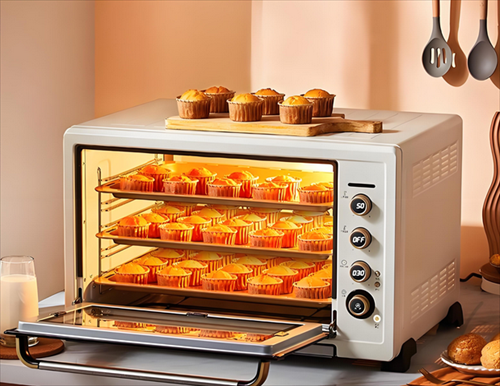
Why the Best Bakers are Adding Infrared to Their Setup
Most ovens work by heating up the air and hoping that heat eventually finds its way into your dough. It works, but it’s slow. That’s why we’ve started putting infrared (IR) heating elements into our warming stations and ovens. Instead of waiting on the air to do the heavy lifting, IR hits the bread directly.
The Secret to a Better Crust
Think of it this way: while convection keeps the air warm, IR handles the “sear.” These heaters send out waves of energy that sink right into the surface of the loaf. This creates a quick temperature jump on the outside. The result? A beautiful “oven spring” and a crust that actually crunches, all while keeping the inside soft and airy. You get the best of both worlds.
The Gear (And the Power Bill)
We use high-wattage quartz tubes because they’re fast. Really fast. Unlike those old coil heaters that take forever to warm up, these lamps are at full blast in a few seconds. It means you aren’t wasting electricity just sitting around waiting for the oven to be “ready.” But here’s the thing: these things pull a lot of power. If you’re running 2000W+ per lamp, your electrical panel is going to feel it. Just make sure your wiring can handle a constant heavy draw, or you’ll be staring at a tripped breaker right in the middle of your morning rush.
A Few Things to Keep in Mind
IR isn’t a magic wand that replaces your oven. If you try to bake a whole loaf with just infrared, you’ll end up with a burnt top and a raw center. It works best as a helper. Use it for that final golden-brown finish or to keep things toasty in a warming station. One last tip: be careful with the lamps. The quartz glass is tough when it comes to heat, but it’s fragile if you hit it. A stray baking tray can shatter a tube in a heartbeat. We always suggest adding some protective guards—it’s a small detail that saves you a huge headache later.