



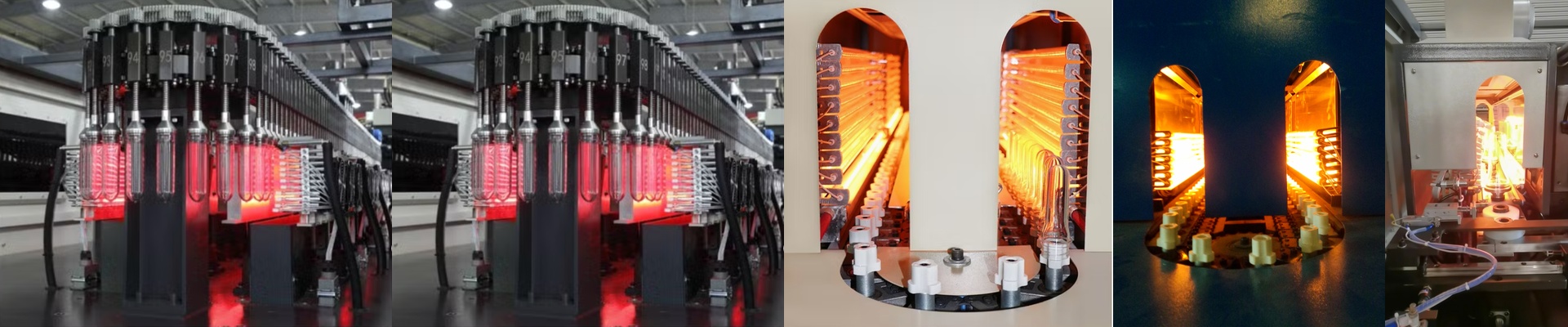

Getting Your SACMI Lamps to Wake Up Faster
If you’re running a SACMI rotary blow molding machine, you know the pace is brutal. The PET preforms fly through that heating oven in a blink. There’s no room for error. If your lamps are sluggish and take too long to hit the right temperature, you’re going to see it in the bottles. We’re talking uneven walls or that annoying “pearling” effect. It’s a headache you just don’t need. The secret to a fast start To keep up with those cycle times, we leaned into short-wave infrared. Standard quartz tubes just have too much lag—they’re too slow to react. Instead, we use a high-density halogen fill. It lets the filament jump to operating temperature almost the second the power hits. We also tightened up the filament winding. It sounds like a small detail, but it’s what allows the lamp to blast peak energy immediately. The nuts and bolts We made these as drop-in replacements because nobody wants to spend their weekend hacking a machine to make a part fit. The connectors are beefy, too. They won’t shake loose even when the rotary machine is humming at full tilt. We also used heavy-duty quartz glass. High-wattage runs get incredibly hot, and cheap glass tends to bow. Ours stays straight. But here’s a tip: keep a close eye on your voltage. A 400V system is what gives you that punchy heat needed to soften PET quickly, but it’s hard on the hardware. If your wiring is frayed or your sockets have some oxidation, you’ll get a voltage drop. When that happens, your response time tanks. Don’t forget the breeze There’s a catch with all this intense heat density. These lamps hit their target fast, but they dump a ton of heat into the oven chassis. You can’t just “set it and forget it.” You need a cooling system that actually works. If your blower fans are clogged with dust or just aren’t powerful enough, the oven temperature will climb until the lamps simply burn out. Keep the airflow clear. It’s the easiest way to make sure your lamps actually last.