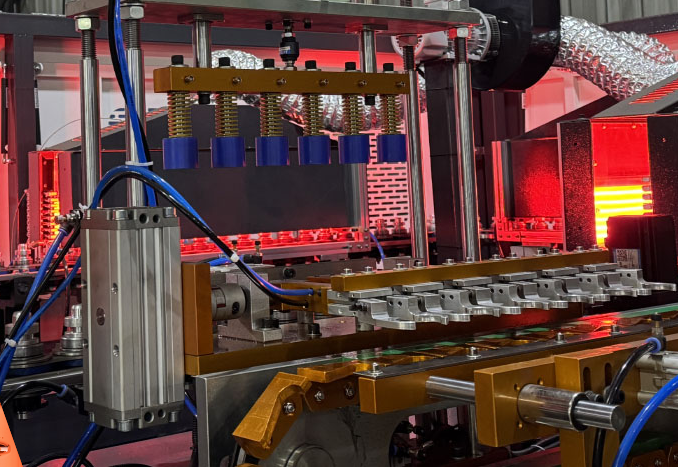
On the blow molding line, uneven preform heating quietly kills throughput. When the heating tunnel can’t hold a stable thermal profile, you get stretch marks, crystallization, and bottle weights that drift all over the place. The fallout is scrap, stoppages, and overtime. Infrared preform reheating is built to tackle that instability head-on.
What matters, technically
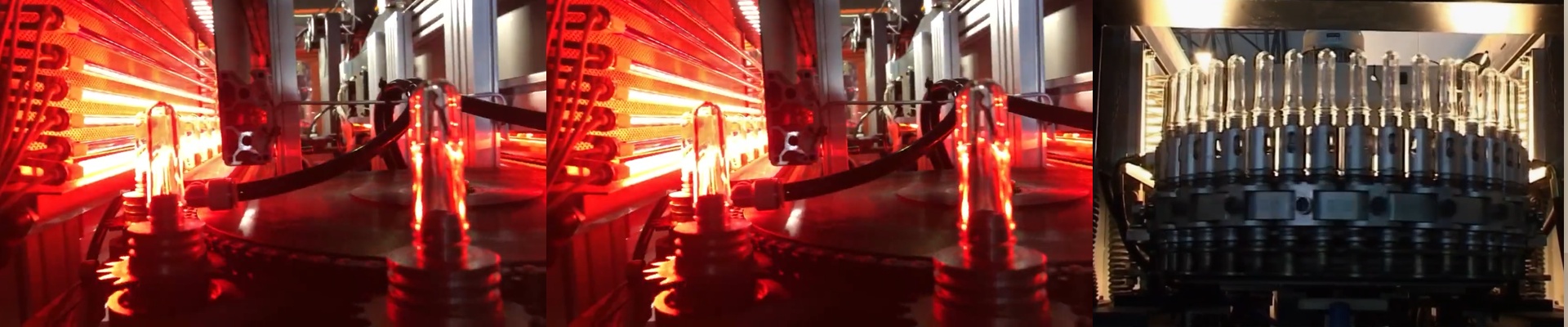
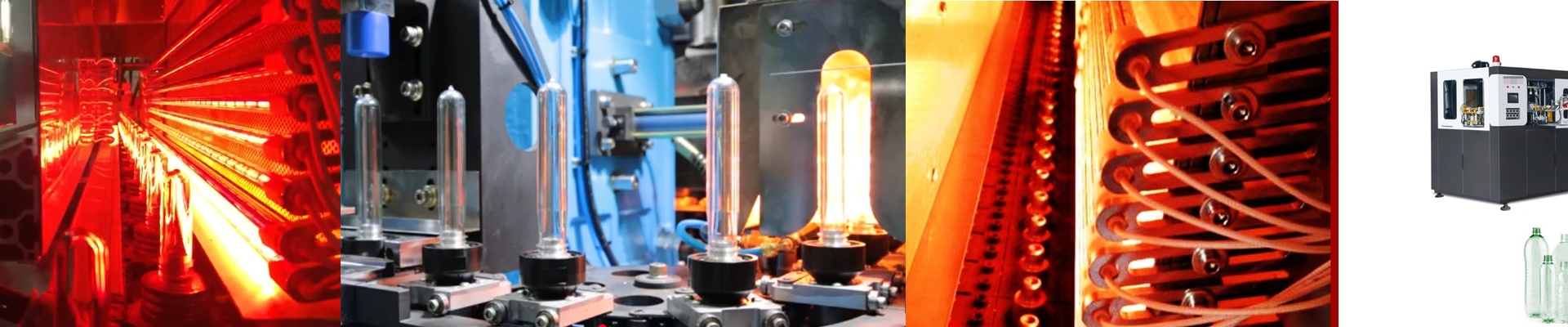
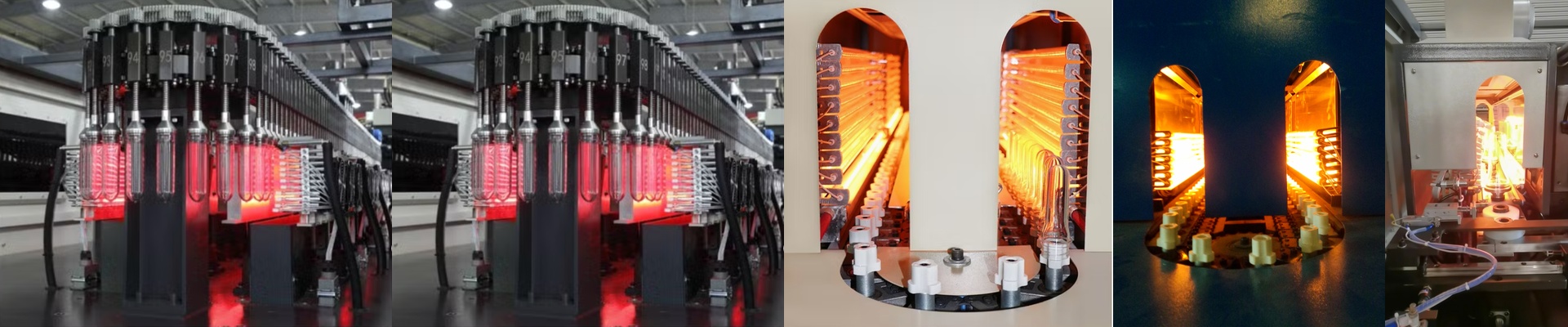
IR reheating isn’t just about temperature — it’s about controlling heat flux. We design the heating around a repeatable temperature rise curve and a uniform thermal field. Quartz or halogen emitters get selected and tuned to hit the right power density and spectral response for PET preform surfaces, so you get fast, controlled surface heating without pushing heat too deep into the wall. Each zone is calibrated to match the preform wall thickness, delivering the exact energy needed without scorching or cold spots. The process leans on precise infrared penetration heating, absorbing energy at the preform wall to land the material right in the ideal stretch window.
Why it works on these machines
On Sidel, Krones, SIPA, Husky, SACMI, or Nissei ASB stretch blow molders, the heating tunnel has to keep pace with the blow station cycle. IR emitters respond quickly and hold tight thermal control, so you can run higher output with fewer rejects tied to temperature swings. You end up with consistent bottle geometry, less scrap, and lower energy use because the emitters only fire when they’re needed — no wasteful standby heat. The setup also lets you fine-tune for different preform colors and materials, keeping the process window wide without losing repeatability.
What to watch for
Installation is straightforward, but alignment is where it lives or dies. Emitter position, reflector geometry, and the preform path have to be set to maintain the intended thermal profile. Double-check voltage, connector type (often R7s), and cooling requirements against your machine’s specs. In hot, humid plants, keep the emitter window clean and confirm cooling airflow — otherwise you’ll see output drift. Start with a baseline heat balance, then adjust zone power to match your actual preform and cycle.